Radio Interview with Michael Sandler
In Barefoot Running,
|

When I saw these at Lexie’s Kitchen, I had to share it with our readers!
They are simple, beautiful, and delicious! As well, they are gluten-free, dairy-free and soy-free! You’ll even get a dose of antioxidants or two while you’re at it!
Pomegranates are seasonal and available in winter. Their red color is beautiful and festive, making them perfect for the holiday season. Try them at your next holiday gathering.
Lexie has inspired me to add pomegranate to my “Chocolate Bark” – which I will share soon.
For now, check out Lexie’s recipe for Chocolate Pomegranate Clusters.

Thanksgiving is a holiday of food. Unfortunately for those with food intolerances, the prospect of a Thanksgiving meal rich in gluten and dairy leaves them saying “no thanks!” Traditional stuffing, a Thanksgiving favorite, is made from bread (wheat). Gravy is made with wheat flour, and mashed potatoes are loaded with milk, cream and butter. Pumpkin pie contains wheat and dairy. All of these foods are off limits for those following a gluten-free and casein-free diet (GFCF diet).
But you needn’t miss out on these delicious holiday dishes, nor the good times that accompany Thanksgiving – not just because your on a gluten-free or other allergen-free diet. With a little ingenuity you can maintain the special diet your family is on right through the holidays.
For those following gluten-free and casein-free, here’s a simple and delicious GFCF Thanksgiving dinner – along with recipes. Your guests won’t know the difference:
Roasted Turkey
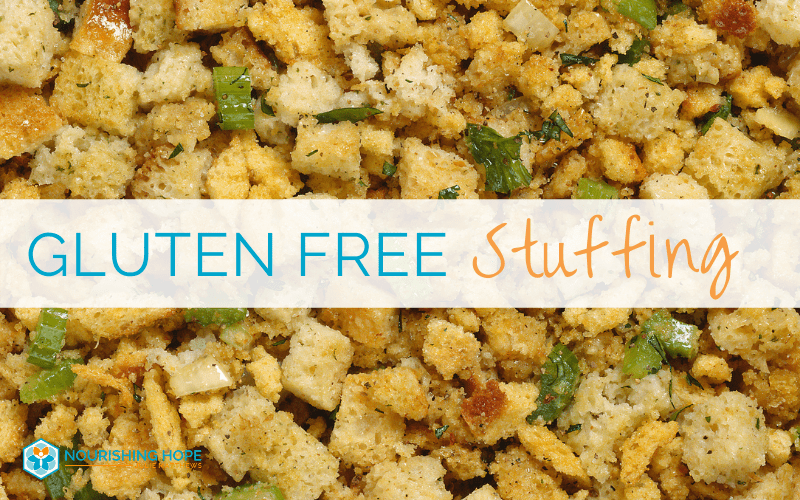
Gluten-Free Stuffing
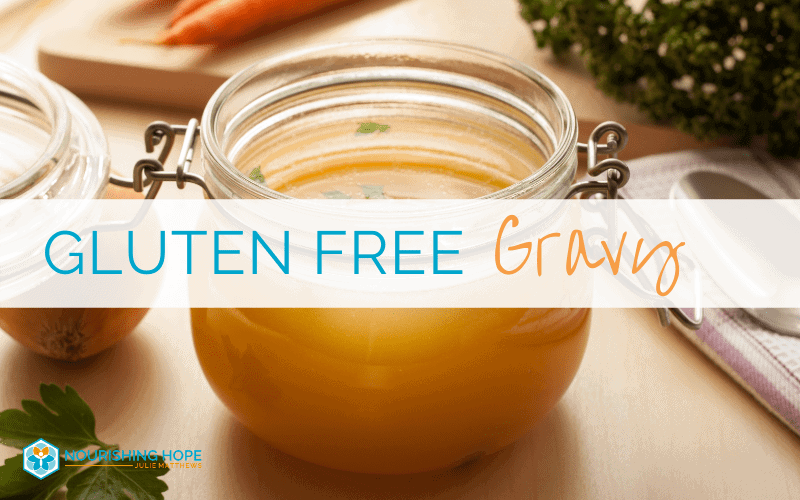
Gluten-Free Gravy
Mashed Potatoes
Brussels Sprouts
Pumpkin Pie
Turkey is inherently gluten-free and dairy-free unless you add something containing those ingredients. Use safe herbs and spices, oils, and avoid flour often used as thickener for gravy. Avoid “apple pie spice” and other spice blends in your Thanksgiving dinner.
My Gluten-Free Stuffing and Gluten-Free Gravy recipes are included—they are simple recipes any home-cook can make. For mashed potatoes: you can very easily substitute non-dairy milk for any milk or cream in the mashed potatoes, and ghee or other fat for the butter. All vegetable recipes can be make gluten-free and dairy-free if they are not already. See the link to my Brussels Sprout recipe – they’re in season and festive with the addition of dried cranberries.
For a pie, there is no excuse not to do GFCF—there are so many options and no one will know the difference! See the Perfect Pantry Pumpkin Pie at GoDairyFree.org for a delicious dairy-free and soy-free pumpkin pie, as well as dozens of other GFCF pie ideas.
Whether you follow these ideas or create your own meal, with a few new twists on your old classics, you can make an allergy-free Thanksgiving meal that is simple and delicious.
Preheat oven to 325°
Prepare the breadcrumbs (or bread “cubes” to be precise). Spread chopped bread pieces on a couple baking sheets one layer deep. Bake for about 10 minutes on 325 degrees, until cubes are dry; however, do not brown them.
Increase temperature of oven to 350°
Cool bread crumbs as you melt ghee in pan. Add onions and celery and sauté for 10 minutes. Add herbs, salt and pepper in for the last couple minutes of cooking. Add 1 ½ cups stock. Temper eggs by spooning a bit of stock into the eggs, adding little by little to the eggs until all the stock/veggie mix is beat in the eggs.
Place bread cubes into a baking dish. Pour stock/eggs over and mix, moistening the bread. You want to make sure the stuffing is not too dry or too soggy. I find that I like each piece of bread to be coated and a bit wet but not soggy all the way through. If it’s too dry add extra stock a little at a time to not over moisten.
Bake for approximately 45-50 minutes on 350 degrees or until the top is brown.
Gluten-Free GravyAfter gently melting ghee in a pot, sprinkle 2 Tablespoons of flour into ghee and mix well by stirring it vigorously. Add more flour until the roux is pasty in texture. Add pan drippings (or stock if you don’t have drippings) a little at a time, mixing vigorously with a whisk until all of the drippings have been incorporated. Add salt to taste.
Ingredients for Gluten-Free StuffingPreheat oven to 325°
Chop celery and onion.
Prepare the breadcrumbs (or bread “cubes” to be precise). Spread chopped bread pieces on a couple baking sheets one layer deep. Bake for about 10 minutes on 325 degrees, until cubes are dry; however, do not brown them.
Increase temperature of oven to 350°
Cool bread crumbs as you melt ghee in pan. Add onions and celery and sauté for 10 minutes. Add herbs, salt and pepper in for the last couple minutes of cooking. Add 1 ½ cups stock. Temper eggs by spooning a bit of stock into the eggs, adding little by little to the eggs until all the stock/veggie mix is beat in the eggs.
Place bread cubes into a baking dish. Pour stock/eggs over and mix, moistening the bread. You want to make sure the stuffing is not too dry or too soggy. I find that I like each piece of bread to be coated and a bit wet but not soggy all the way through. If it’s too dry add extra stock a little at a time to not over moisten.
Bake for approximately 45-50 minutes on 350 degrees or until the top is brown.
Chop celery and onion.
Slice bread into half inch cubes.
Spread chopped bread pieces on a couple baking sheets one layer deep. Bake for about 10 minutes on 325 degrees, until cubes are dry; however, do not brown them.
Increase temperature of oven to 350°
Cool bread crumbs as you melt ghee in pan. Add onions and celery and sauté for 10 minutes. Add herbs, salt and pepper in for the last couple minutes of cooking. Add 1 ½ cups stock.
Temper eggs by spooning a bit of stock into the eggs, adding little by little to the eggs until all the stock/veggie mix is beat in the eggs.
Place bread cubes into a baking dish. Pour stock/eggs over and mix, moistening the bread. You want to make sure the stuffing is not too dry or too soggy. I find that I like each piece of bread to be coated and a bit wet but not soggy all the way through. If it’s too dry add extra stock a little at a time to not over moisten.
Bake for approximately 45-50 minutes on 350 degrees or until the top is brown.
• 1/4 cup ghee (or a lard and expeller pressed coconut oil blend if you are not certain your ghee has all the milk solids removed)
• 2-4 tablespoons sorghum flour or sweet rice flour
• 2 cups of pan drippings strained through cheesecloth to remove bits (to make a large volume of drippings, add several cups of water to the bottom of the roasting pan, along with chopped onion and celery that you can place in and around the bird)
• Salt to taste
After gently melting ghee in a pot, sprinkle 2 Tablespoons of flour into ghee and mix well by stirring it vigorously. Add more flour until the roux is pasty in texture. Add pan drippings (or stock if you don’t have drippings) a little at a time, mixing vigorously with a whisk until all of the drippings have been incorporated. Add salt to taste.
Drink camel’s milk? Really? And, for those who cannot drink the milk from a goat or cow, is it possible camel’s might be for you?
As a nutritionist for children with autism for 10 years, my research and clinical experience indicate that most children with autism cannot adequately tolerate dairy. Particularly, their bodies have challenges digesting the protein casein. Even when milk is raw and contains A2 beta-casein (not A1), experience shows that most children do not tolerate it.
So, imagine my delight (and skepticism) when parents approached me and shared personal stories about the healing properties of camel milk, and how its fundamentally different than any other milk on the planet.
As I began to research it for myself, I heard from autism parents who told me that camel milk has helped their children tremendously, with not adverse reactions to this “dairy.” (Thank you Randi, Jessica and Nicole – I learn so much from you parents on the front lines.)
Camel milk may seem obscure, but the more I research and read personal anecdotes from parents and clinicians the world over, the more amazing I think it may actually be at helping recover kids with autism – and many others with gut issues, immune system challenges, nutrient deficiencies, and more!
If you’re following the GAPS Diet, gluten-free casein-free, or any healing food strategy intended to improve the body’s chemistry and functioning, you should be curious about camel milk.
Research and experience from an increasing number of people around the world demonstrate that camel milk facilitates healing in our bodies. Camel milk has many unique and amazing properties.
Here’s some quick research:
Since children with autism routinely have immune system challenges: inability to fight bacterial, viral and other infections, and states of chronic inflammation, allergy, and autoimmunity, camel milk has promising health and healing benefits.
Camel herders and indigenous cultures have known about the power of camel milk for a long time. To this day, Bedouin parents send their children to drink camel milk for a couple weeks in their childhood, as they know that it sets up a strong immune system for life. Dr. Weston A. Price observed their dental health (and therefore physical health) was excellent stating, “The Arabs in several districts use camels’ milk extensively. It is nutritious, and in much of the desert country constitutes the mainstay of the nomads for months at a time.” (5)
Camels are built differently than any other animal. Camels are not ruminants but are Tylopodes and have three stomachs, but they do ruminate. They can survive in incredibly harsh climates, and are able to live without water for 30 days at a time (even with little food), while still producing high quality milk. Imagine that! A large part of camel milk’s healing power stems from the unique and hardy immune system of camels, it’s unlike any other mammal.
Camel milk is highly nutritious. The milk contains only 2% fat (I’m not a fan of a low-fat, but these are the facts). The fat molecules are joined to protein, so there is no stress on the liver to process it. Higher is some nutrients and lower in others—camel milk is rich in vitamin C (5x that of cow’s milk), iron (10x) and calcium. The fat profile of camel milk varies in a “rich diet” (domesticated camels) versus the diet camels eat in the desert – but generally it’s high in polyunsaturated fatty acids, with a higher ratio of omega 3 to omega 6 compared with cow’s milk.
Camel milk is considered a complete food and can be consumed exclusively while meeting all nutritional requirements. Camel milk is most frequently consumed raw and unpasteurized, because the raw milk contains the most nutritional and immune properties. Only when the quality and safety of the milk is in question would someone pasteurize it.
Camel’s milk contains no beta-lactoglobulin and a “new” beta-casein (6). Therefore it is not reactive to children with autism and even non-allergenic to those with even the most sensitive allergy to milk and casein. One study found Camel’s milk was also not recognized from circulating IgEs from a child specifically allergic to ewe’s milk.(7) Children with severe food allergies react well to the milk, and astonishingly, fully recover from their allergies including to other foods (1).
Casein molecules are actually micelles and camel micelles have been found to be larger in size (15 nm) than those of cow milk or human milk. (8). Camel milk has a lower pH than other milk, so that upon entering the stomach the casein micelles do not breakdown into casein and whey and therefore do not break into casomorphins. Casomorphin creation from cow milk consumption is a common problem in autism that increases autistic symptoms.
Camel milk has an amazing immune profile.
The immunoglobulins (Igs) and protective proteins in camel milk contribute to camel milk’s incredible infection fighting and eradication capacity. Camel Igs (which exist in the milk) are able to penetrate into tissues and cells that human Igs were unable to. Therefore, they are able to get into the kidney or inside a cell, where they are also able to completely neutralize the enzyme activity of an infectious agent such as a bacteria or virus.
Camel milk also contains immunoglobulins (Igs) that are special in camels, including unique subclasses IgG2 and IgG3. The Igs are the same structure as human immunoglobulins but only one-tenth the size. Being so small, they can penetrate into tissues and organs to fight infection and aid repair, where human antibodies cannot.
Camel antibodies have superior antibacterial and antiviral properties. As stated in Dr. Reuven Yagil’s autoimmune paper, “conventional antibodies rarely show a complete neutralizing activity against enzyme antigens, but camel IgG has a full neutralizing activity against tetanus toxin as it enters the enzymes structure.” (9). Viruses can also be neutralized by knocking out their enzyme activity, and studies show the camel antibody is an effective inhibitor against hepatitis C enzyme system (10).
In a study on camel milk for autism, the author compares camel milk to intravenous immunoglobulin therapy that acts as a natural immunoglobulin therapy, whose effects continue after the therapy is stopped, because of the immune rehabilitating action.
Camel milk contains the following immune proteins (often in higher qualities than other milk):
One theory about autoimmune disease is that the body attacks itself because it’s trying (in vain) to get at the bacteria buried in the intestinal tissue. Camel milk’s antibacterial activities and the special immune response allow for their penetration into the intestinal tissues when the “quiet” bacteria turn pathogenic. Because the antibodies are able to get into the affected tissue to attack the infectious agent (for example the saprophyte bacteria found in Crohn’s disease), camel milk can help someone heal in ways not seen through any other intervention – dietary or otherwise.
Dr. Yagil says that “camel milk does not contain the two caseins that lead to the autism symptoms when drinking cow milk. Therefore camel milk can safely be drunk by autistic children.” The results published in a paper on camel milk for autism were very positive, especially for younger children that “showed an apparent complete recovery from autism after strict removal of cow’s milk”. (2) Regarding the results seen with autism, Dr. Yagil explains, “it is NOT only a case of repressing the clinical signs but a rehabilitation of the immune system. Therefore the kids completely recover. “
Since camel milk is nourishing and easy to digest, it does not trigger allergenic or opiate responses, and helps heal the gut and infections, protecting and enhancing the immune system.
Considering the vast qualities of camel milk, there’s seems no limit to the range of maladies that it many help address. The positive reports from parents are exciting – camel milk holds great promise, and future study and clinical experience will be valuable. From parents to professionals like Dr. Yagil, I am intrigued and enthused about the value and healing properties of camel milk for people with a wide variety health conditions.
Camel milk would be a wonderful addition to people on special diets such as GAPS. I’m drinking it, and so is my baby.
Remain connected to my blog to learn of my clinical (and personal) experience with camel milk!
ADDITIONAL INFORMATION – UPDATED 3/23/12
Autism research is a rapidly growing field. While many parents report great results with camel milk, recently new information has come to light about cerebral folate deficiency (CFD), a condition of below normal levels of folate in the central nervous system. Folate receptor protein alpha (FRA) transports folate in the central nervous system. Dr. Quadros who tested camel’s milk stated, “folate receptor alpha antigen is very similar to cow’s milk and the immunoreactivity with the folate receptor alpha is also similar.” In light of this new information, it appears for children who produce autoantibodies to the folate receptor alpha, camel milk would be contraindicated and should be avoided. Dr. Dan Rossignol has found these antibodies in 62% of children with ASD that he’s tested. Because it is so prevalent, Dr. Rossignol recommends all children with ASD be tested for FRA autoantibodies. You can learn more about testing from your doctor, Dr. Quadros, and Quadros Lab.
_____________________________________________________________________
References
1. Yosef Shabo MD, Reuben Barzel MD, Mark Margoulis MD and Reuven Yagil DVM. Camel milk for food allergies in children. IMAJ 2005;7:796–798
2. Yosef Shabo, PhD, MD and Reuven Yagil, DVM. Etiology of autism and camel milk as therapy. International Journal on Disability and Human Development 2005;4(2):67-70
3 R.P. Agrawal, R. Beniwal, S. Sharma, D.K. Kochar, F.C. Tuteja, S.K.Ghorui and M.S. Sahani. Effect of raw camel milk in type 1 diabetic patients: 1 year randomised study. Journal of Camel Practice and Research 12(1), p. 27-35, 2005
4. Dr. Reuven Yagil, video presentation at the symposium of “Gastro-Intestinal and Immunological diseases and how they relate to Camel Milk.” February 9, 2011.
5. Price, Weston A, Nutrition and Physical Degeneration. The Price-Pottenger Nutrition Foundation, La Mesa, CA, 2008.
6 Obaid Ullah Beg, Hedvig von Bahr-Lindström, Zafar H. Zaidi, Hans Jörnvall. Characterization of a camel milk protein rich in proline identifies a new β-casein fragment. Regulatory Peptides, Volume 15, Issue 1, August 1986, Pages 55-61.
7. P. Restani, A. Gaiaschi, A. Plebani, B. Beretta, G. Cavagni, A. Fiocchi, C. PoiesiI, T. Velona, A.G. Ubazio and C.L.. Cross-Reactivity between milk proteins from different animal species. Clinical and Experimental Allergy, 1999, Volume 29, 997-1004.
8 Kappeler S., Farah Z., Puhan Z. Sequence analysis of Camelus dromedarius milk caseins. Journal of Dairy Research (1998) 65 209–222.
9 Prof Reuven Yagil, Paper, “Camel Milk and Autoimmune Diseases: Historical Medicine.” 2004.
10 Martin, F., Volpari, C., Steinkuhler, C., Dimas, N., Burnetti, M.,Biasiol, G., Altamura S., Cortese, R., De Francesco, R., Sollazzo, M. Affinity selection of a camelized V (H) domain antibody inhibitor of hepatitis Cvirus NS3 protease. Protein Engineering. (1997) 10: 607-614.
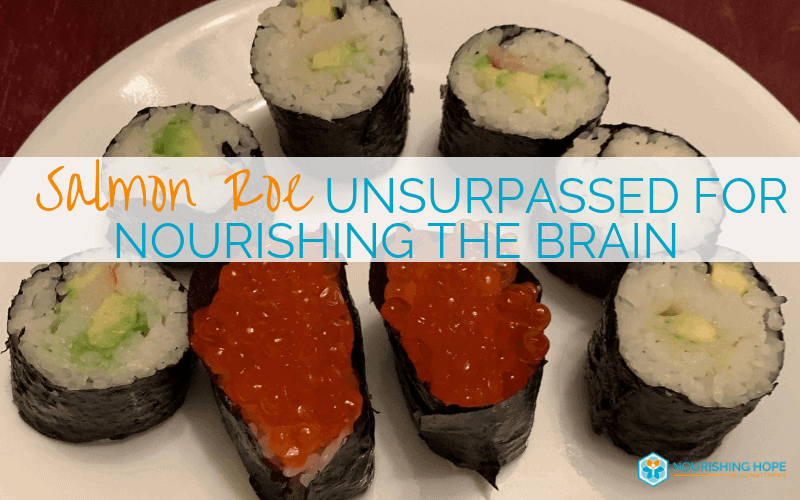
Fish eggs, particularly salmon roe, are very rich in nutrients.
Salmon roe has the highest level of omega 3 of any other food. The omega 3 fats (EPA and DHA) in one ounce of salmon roe equate to 1800 mg. This is 3.5 times the amount in salmon (from the highest omega 3 species).
In addition to being rich in brain fats, salmon roe is rich in antioxidants and fat-soluble vitamins including high levels of vitamins C, D and E, thiamine, folate, vitamin B12 and selenium. Fish eggs are also high in protein, with one ounce of salmon roe containing 6 grams of protein. It is also a good source of cholesterol for those children who are allergic to chicken eggs.
Salmon roe (and other fish eggs for that matter) are great for brain development in children, fertility, and good health.
Weston A. Price a nutrition researcher in the 1930s and 40s who studied the diets of native cultures said about salmon and other fish eggs, “The eggs of the salmon are dried and stored as an important item of nutrition for both children and adults. They are also used to increase the fertility of the women. From a chemical standpoint they are one of the most nutritious foods I have found anywhere” and “In many of the primitive tribes living by the sea we found emphasis on the value of fish eggs.”
Salmon roe is delicious. It is cured in salt; therefore, tasting like little salty peas that burst in your mouth.
Salmon roe is a great first food for babies. My baby loved (and still does) picking up the little pea-sized sticky eggs and popping them in her mouth. While their a toddler favorite, don’t forget to try them with your big kids too! You might be surprised, even some picky eaters enjoy them.
If you’ve never done it before, try salmon roe. Eat them plain, or add them on top of some rice or a deviled egg.
You can get salmon roe (as “salmon caviar”) at Vital Choice Seafood, a company dedicated to the highest quality and sustainability. Save 10% on your order through November 30st, 2011 by using the coupon code: hope10.
Here’s a recipe from Special Diets for Special Kids that your kids will love.
Special Diets for Special Kids is an all-time classic! It has just been revised and the new edition does not disappoint.
The new printing of Special Diets for Special Kids by Lisa Lewis is outstanding! It is definitely a go-to guide for GFCF recipes! The new format with colored photos and layout is beautiful. The collection are great foundational recipes, and it’s obvious they were created from the experience of a mother.
World’s Easiest Chicken Curry
Not long ago I roasted a 7 lb chicken on the grill. It was delicious, but there were only three of us at the table so needless to say, there were a lot of leftovers! The next night I tossed this simple curried dish together, made some rice and the whole thing was done in 20 minutes. Curry doesn’t have to be hot—my son prefers mild foods so I went easy on the chilies. Adjust for your family’s taste.
Ingredients
Cooked chicken meat, cubed with skin removed
1 onion, sliced
2 cloves of garlic, minced*
Small knob of ginger, peeled and grated*
1 15 oz can coconut milk, regular or light
2 TBL tomato paste (tubed)
Cilantro* (optional)
1-3 tsp curry powder, according to taste
Salt, pepper, chilies
Oil
Sauté onion in a few TBL of oil. When onion is soft but not browned, add ginger and garlic and cook over low heat for 2-3 minutes more. Stir often, as garlic tends to burn. Add the tomato paste, seasonings and then the coconut milk. Cook over low heat until the mixture starts to thicken, then add the chicken. Cook until the sauce is quite thick and the chicken is heated through. Sprinkle with fresh coriander and serve over rice.
*Some stores carry Dorot brand frozen cubes of garlic, ginger, cilantro and other herbs. I love the convenience of these cubes and often use them in recipes like this. They preserve the flavor of the herbs and are easy to toss into casseroles and other dishes. Find them at Trader Joe’s and some grocery stores.
Lisa Lewis’s Special Diets For Special Kids I & II have been helping parents since 1998. Her new revised and expanded edition offers both books in one, complete with the latest research, revised recipes and color photos. The first part of the book describes dietary intervention in detail, from a scientific and personal approach and the second part is an easy-to-follow cookbook. It includes over 200 recipes, including old favorites and new ones that are sure to become family favorites.
Purchase your copy at AutismNDI.com today!
Do you love butter but are avoiding it because of dairy intolerance? Then try ghee – it’s easy to cook with, its nutritional properties are outstanding, and it’s casein-free.
Dairy is rich in many important fatty acids and fat-soluble vitamins, but casein can be a problem for many people, including those with autism. This is where ghee comes in. While ghee is made from butter and contains many important nutrients found in dairy, it’s casein-free.
Ghee stems from South Asia and is commonly used in the preparation of Indian foods. Ghee is a form of clarified butter. Making ghee involves cooking butter, which separates and eliminates the milk solids that contain casein. Therefore, ghee does not contain casein and can be used if you’re following a casein-free diet.
Ghee is a wonderful food—delicious, nutritious, and great for cooking.
Particularly, ghee made from grass-fed butter is rich in vitamins A, D, E and K, as well as the fatty acid CLA and butyric acid (a short chained fatty acid that fuels the intestinal cells). Grass-fed ghee also has a higher ratio of omega 3 to omega 6 fatty acids than conventionally raised dairy products.
How to use Ghee
Ghee is an excellent substitute in recipes that use butter. It works well in baked goods – just melt it at low heat before adding to the recipe where liquid oil is indicated. Ghee also has a high smoke point so it does not burn easily like butter and some other oils. It works well with pan-frying and other cooking methods that require higher heat.
You can use it in place of butter and other “butter spreads” for a much more nutrient dense choice. I think it is delicious spread on toast or other places butter might be used. Because one of the things that make butter taste so good is salt (and ghee is salt-free), I recommend a small sprinkle of salt on the food to help mirror the delicious salty taste of butter.
Ghee has a slightly stronger flavor than butter, so for some children you might try softening ghee and mixing it with 50% coconut oil (refined is flavorless)—and add a pinch of salt. You can also add a touch of honey for a delightful spread.
My favorite uses for Ghee
Make or Buy
You can make your own ghee, or buy it in your health food store. To ensure that you make high quality, nutritious ghee, only use butter from pastured animals that eat grass. Unsalted, cultured butter is a good choice to use for making ghee. There are many videos online that demonstrate how to make ghee.
When buying ghee in the store, choose a brand that uses grass-fed butter. I have tried several brands of ghee and my personal favorite is Pure Indian Foods—they have been making ghee for generations and use only high quality grass-fed butter. You can see this with the very golden color of their ghee indicating a nutrient-dense food. It smells wonderful when heated, and tastes divine.
To ghee or not to ghee – I say ghee!
Enjoy!
Diet Compliance: GFCF/SCD/GAPS/LOD/Paleo/Nut-Free
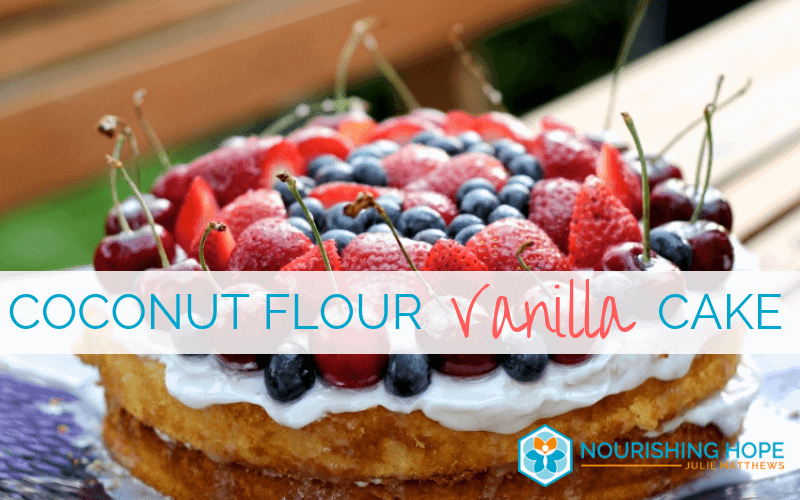
I created this cake for my friend and colleague Sandrine Hahn of Nourishing Our Children for her birthday party when she was on the GAPS diet. I adapted this recipe from Elana Amsterdam’s “Vanilla Cupcakes” in Gluten-Free Cupcakes using all SCD/GAPS compliant ingredients. I’ve made this many times since then, including for 400 people at the MINDD Forum in Sydney Australia, and it always turns out great. The texture is very forgiving. Not being in my own kitchen, I did not have my usual measuring devices and each batch came out good. I was able experience with varying amount of oil and found it always turned out well. Coconut flour makes a cake fluffier and lighter than with nut flour. It’s my favorite gluten-free flour at the moment. The vanilla is strong and delicious in this recipe.
Preheat the oven to 330 degrees. Grease and flour two 8-inch cake pans. In a large bowl, combine the coconut flour, salt, and baking soda. In a medium bowl, whisk together the eggs, melted ghee, honey and vanilla extract. Blend the wet ingredients into the coconut flour mixture with a handheld mixer until thoroughly combined.
follow us:
Recent Comments