FOR IMMEDIATE RELEASE | SEPTEMBER 7, 2026
Autism Informed Consent Must Include Hope:
Biology and Nutrition Move Further Into the Autism Medical Conversation
Emerging federal research priorities and leading autism health conferences signal growing recognition of whole-body health, individual biology and personalized nutrition in autism care.
Issued by Martin Matthews, Co-founder and Director of Nourishing Hope
SAN FRANCISCO, CA – What if some of the symptoms attributed simply to “autism” are influenced by underlying health conditions that can be identified and addressed?
That question is moving increasingly into the medical conversation.
This week, the Medical Academy of Pediatric Special Needs (MAPS) convenes physicians and health professionals in Philadelphia for its Fall 2026 conference, “Redefining Autism: Brain-Based Subtypes and Their Clinical Implications.” Its program examines autism through biomedical thinking, functional medicine, nutrition, metabolic and mitochondrial dysfunction, gastrointestinal health, immune dysfunction and neurology.
Julie Matthews, MS, a published nutrition researcher and educator who has specialized in autism for 25 years, will present her clinical experience and the foundational nutrition curriculum.
In November, Matthews will also present at the Documenting Hope Health & Healing Expo, where researchers, clinicians and families will explore the interconnected roles of the microbiome, nervous system, mitochondria, metabolism, nutrition and other influences on health.
The shift extends to federal autism research priorities. The 2026–2028 Interagency Autism Coordinating Committee (IACC) Strategic Plan Working Draft calls for greater investigation of biologically meaningful subgroups and therapeutic domains including gastrointestinal biology, microbiome function and nutrition, immune and inflammatory biology, and mitochondrial and metabolic function.
Together, these developments signal an important evolution: autism healthcare is increasingly examining the biology beneath the diagnosis—and what can be done when modifiable health factors are identified.
The Evidence for Nourishing Hope Is Already Here
Nourishing Hope is the process of using science-backed nutrition strategically—understanding individual biology and nutritional needs, taking informed action, and refining the approach based on response.
A substantial body of research has examined the relationships between nutrition, diet and autism. Among that evidence are two peer-reviewed studies co-authored by Matthews and leading autism researcher James Adams, PhD, who leads the Autism/Asperger’s Research Program at Arizona State University.
A 12-month randomized controlled trial published in Nutrients found significant improvements in nutritional and metabolic status, developmental progress and autism-related symptoms among participants receiving a comprehensive nutritional and dietary intervention.
In 2023, Matthews and Adams published research in the Journal of Personalized Medicine examining caregiver-reported outcomes from 13 therapeutic diets used for autism. Caregivers reported benefits across all 13 therapeutic diets studied, reinforcing the importance of matching nutritional strategies to individual needs.
In 2026, a literature review and case report published in Integrative Medicine by researchers affiliated with Documenting Hope documented the elimination of autism symptoms in a child following a Specific Carbohydrate Diet intervention, with long-term follow-up showing an ADOS score of zero at age 18. The authors also reviewed decades of research on medical nutrition therapy for autism and called for further investigation.
Every child needs nourishment. The appropriate nutritional strategy will differ from person to person, but the relevance of nutrition does not. Families deserve to know these possibilities exist.
From Evidence to Informed Consent
“For 25 years, I’ve watched Julie and other pioneering clinicians and researchers build the evidence that food and nutrition can influence health, learning and behavior in autism,” said Martin Matthews, co-founder of Nourishing Hope and the BioIndividual Nutrition Institute.
“Now we’re watching leading medical organizations, researchers and federal autism priorities converge around many of these same biological systems. The question is no longer whether nutrition matters in autism. The question is whether we are willing to act on what we already know.”
For Nourishing Hope, that makes this fundamentally an issue of informed consent.
Families deserve to know that gastrointestinal health, nutritional status, metabolism, inflammation and other biological factors can influence health and function—and that personalized nutrition offers an actionable way to support individual needs.
Families should not have to discover these possibilities on their own.
For more than two decades, Nourishing Hope has advanced this whole-person, personalized approach to autism nutrition.
As autism itself is being more deeply investigated and understood, healthcare has a corresponding responsibility: families deserve to know what science and clinical experience show about the potential to improve health and function—and the role personalized nutrition can play.
Autism informed consent must include hope.
About Julie Matthews
Julie Matthews, MS, is an award-winning author, published researcher and pioneer in personalized nutrition for autism and related conditions. She holds a master’s degree in medical nutrition, with distinction, from Arizona State University and is co-author of peer-reviewed autism nutrition research published in Nutrients and the Journal of Personalized Medicine. She is the author of The Personalized Autism Nutrition Plan and Nourishing Hope for Autism.
About Nourishing Hope and BioIndividual Nutrition Institute
Founded in 2002, Nourishing Hope provides science-based nutrition education and practical guidance for families affected by autism and related conditions. Since 2014, the BioIndividual Nutrition Institute provides advanced therapeutic nutrition education and professional training for health practitioners..
Press Contact and author of this release:
Martin Matthews
Director, Nourishing Hope
martin@nourishinghope.com
415-235-2960
NourishingHope.com
ACCOMPANYING STATEMENT
What I mean by “Autism Informed Consent Must Include Hope”
The idea that nutrition should be part of the autism healthcare conversation can provoke predictable questions. They are reasonable questions—and my position is straightforward.
Are you saying diet cures autism?
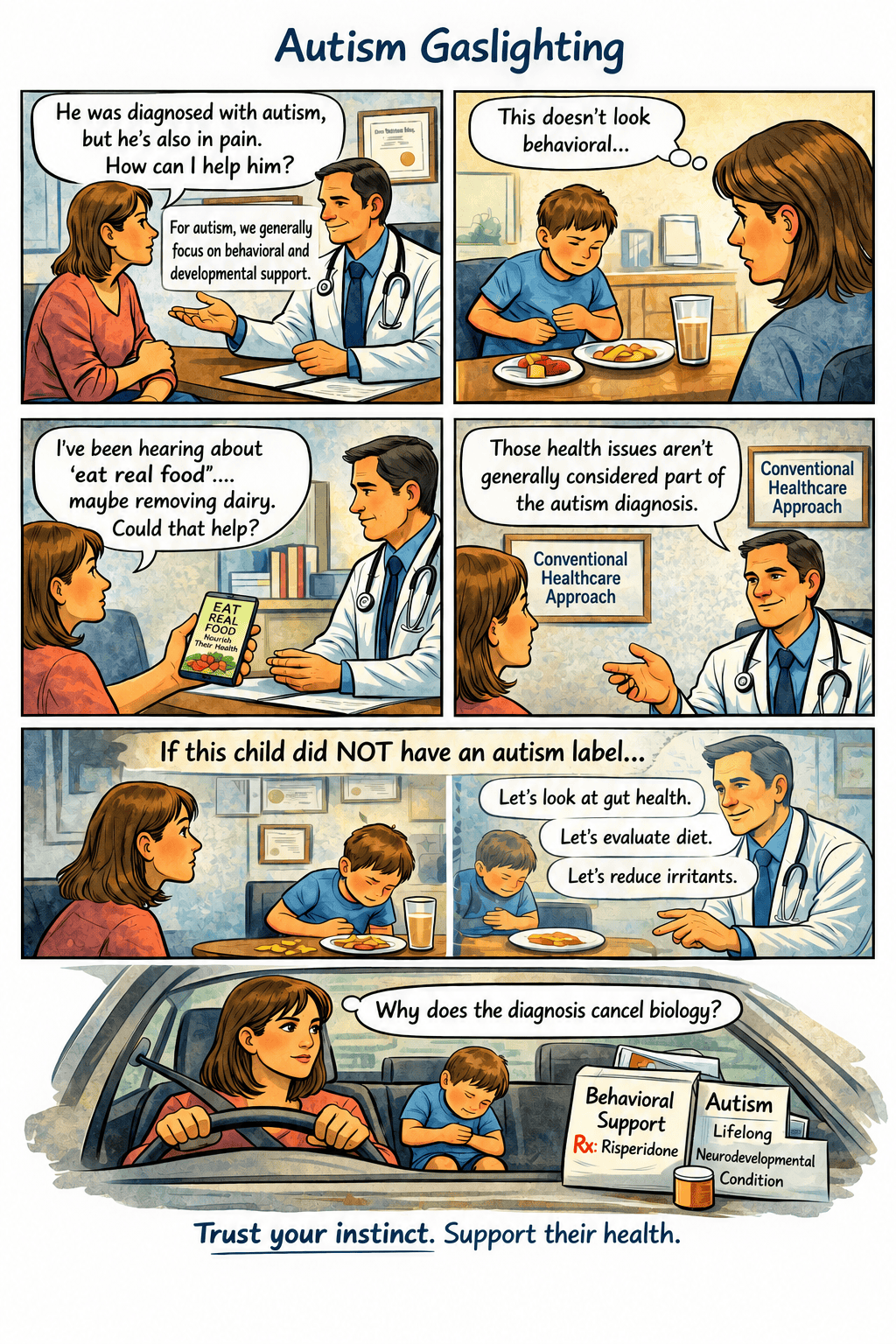
I’m saying something more fundamental: an autism diagnosis does not cancel biology. Gastrointestinal health, nutritional status, metabolism, immune function, inflammation and other physiological factors can influence health and function. When these factors can be identified and supported, families deserve to know that opportunities to improve health and function may exist.
Which diet?
There is no single “autism diet.” Different people have different biology, symptoms, nutritional needs and responses. Research examining multiple therapeutic diets reinforces what Julie Matthews and other autism nutrition pioneers have taught for decades—including Bernard Rimland, James Adams, Martha Herbert, and Natasha Campbell-McBride: the nutritional strategy needs to fit the individual.
Does every diet work for everyone?
No—and that is precisely the point. Individual variability is not an argument against giving attention to food choices; it is the reason for a personalized bioindividual nutrition approach. Every person needs nourishment. The appropriate nutritional strategy will differ, but the relevance of nutrition does not.
Is the science conclusive?
Science rarely arrives all at once. We have randomized controlled research, observational and caregiver-reported research, case reports, established nutritional physiology, and important questions still being investigated. These forms of evidence should not be confused with one another, but neither should legitimate evidence be ignored while we wait for every question to be answered.
What is “Nourishing Hope”?
It isn’t a diet. We began using the term 20 years ago to describe a process: understand the individual’s biology and nutritional needs, become strategic about food and nutrients, take informed action, observe response, and personalize and refine the approach. Knowledge creates possibilities that did not exist when those possibilities were unknown.
Why call this informed consent?
Because families cannot consider an option they were never told exists. This begins with something more fundamental than recommending a particular therapeutic diet: families should know that what their child eats, their nutritional status, and their individual physiology matter to their health and can influence learning and behavior. Informed consent should include what is established, what evidence suggests may be possible, and what remains uncertain. It should give families enough information to make thoughtful decisions about their own child’s health.
And why “hope”?
Hope is not a promised outcome. It is awareness of legitimate possibility.
That awareness gives families agency—the opportunity to ask questions, investigate health, make informed choices and discover what may be possible for their individual child.
For 25 years, I have watched the autism nutrition conversation evolve. Today, researchers, federal research priorities and leading medical organizations are increasingly investigating the very biological systems that make these questions important.
The request of healthcare is therefore remarkably simple:
Don’t let the diagnosis end the investigation of the person.
Tell families what is known. Tell them what is not yet known. Tell them what can reasonably be explored.
That is informed hope. And autism informed consent must include it.
Martin Matthews
Co-founder, Nourishing Hope
Co-founder, BioIndividual Nutrition Institute