
Tag Archives: Autism

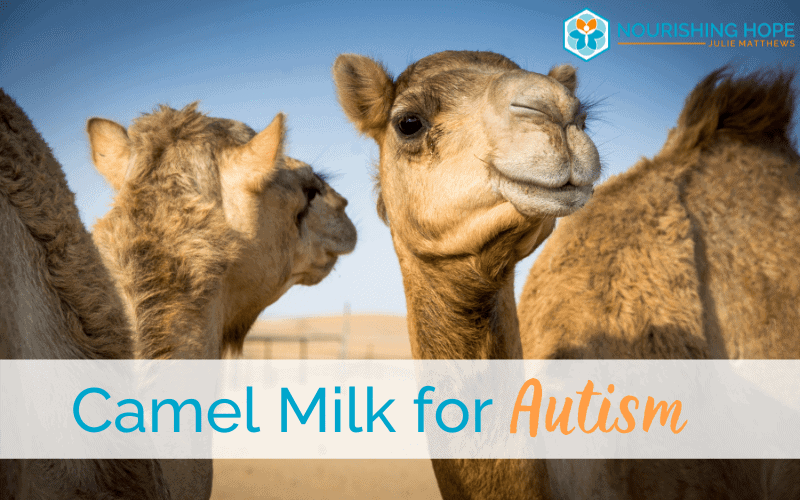
Camel Milk: Healing or Hype?

Drink camel’s milk?  Really?  And, for those who cannot drink the milk from a goat or cow, is it possible camel’s might be for you?

As a nutritionist for children with autism for 10 years, my research and clinical experience indicate that most children with autism cannot adequately tolerate dairy. Particularly, their bodies have challenges digesting the protein casein.  Even when milk is raw and contains A2 beta-casein (not A1), experience shows that most children do not tolerate it.

So, imagine my delight (and skepticism) when parents approached me and shared personal stories about the healing properties of camel milk, and how its fundamentally different than any other milk on the planet.

As I began to research it for myself, I heard from autism parents who told me that camel milk has helped their children tremendously, with not adverse reactions to this “dairy.” (Thank you Randi, Jessica and Nicole – I learn so much from you parents on the front lines.)

Camel milk may seem obscure, but the more I research and read personal anecdotes from parents and clinicians the world over, the more amazing I think it may actually be at helping recover kids with autism – and many others with gut issues, immune system challenges, nutrient deficiencies, and more!

If you’re following the GAPS Diet, gluten-free casein-free, or any healing food strategy intended to improve the body’s chemistry and functioning, you should be curious about camel milk.

Camel Milk’s Healing Power

Research and experience from an increasing number of people around the world demonstrate that camel milk facilitates healing in our bodies. Camel milk has many unique and amazing properties.

Here’s some quick research:

  • Camel milk has been shown to heal food allergies (1) and gut problems. The antibodies and immune properties of camel’s milk contribute to its wonderful viral and bacterial fighting abilities.
  • It is particularly helpful in addressing immune system dysregulation in various forms.  Camel milk can support and help people with autoimmune conditions, including autism, heal.
  • A research study by Dr. Reuven Yagil (2005) shows camel milk has positive results in children with autism. (2)
  • Camel milk contains insulin and is effective in diabetes (3), including gestational diabetes (4).

Since children with autism routinely have immune system challenges: inability to fight bacterial, viral and other infections, and states of chronic inflammation, allergy, and autoimmunity, camel milk has promising health and healing benefits.

Camel herders and indigenous cultures have known about the power of camel milk for a long time.  To this day, Bedouin parents send their children to drink camel milk for a couple weeks in their childhood, as they know that it sets up a strong immune system for life.  Dr. Weston A. Price observed their dental health (and therefore physical health) was excellent stating, “The Arabs in several districts use camels’ milk extensively.  It is nutritious, and in much of the desert country constitutes the mainstay of the nomads for months at a time.” (5)

Camels are built differently than any other animal. Camels are not ruminants but are Tylopodes and have three stomachs, but they do ruminate.  They can survive in incredibly harsh climates, and are able to live without water for 30 days at a time (even with little food), while still producing high quality milk.  Imagine that!  A large part of camel milk’s healing power stems from the unique and hardy immune system of camels, it’s unlike any other mammal.

Camel Milk: Highly Nutritious with Unique Casein

Camel milk is highly nutritious. The milk contains only 2% fat (I’m not a fan of a low-fat, but these are the facts).  The fat molecules are joined to protein, so there is no stress on the liver to process it.  Higher is some nutrients and lower in others—camel milk is rich in vitamin C (5x that of cow’s milk), iron (10x) and calcium. The fat profile of camel milk varies in a “rich diet” (domesticated camels) versus the diet camels eat in the desert – but generally it’s high in polyunsaturated fatty acids, with a higher ratio of omega 3 to omega 6 compared with cow’s milk.

Camel milk is considered a complete food and can be consumed exclusively while meeting all nutritional requirements.  Camel milk is most frequently consumed raw and unpasteurized, because the raw milk contains the most nutritional and immune properties.  Only when the quality and safety of the milk is in question would someone pasteurize it.

Camel’s milk contains no beta-lactoglobulin and a “new” beta-casein (6). Therefore it is not reactive to children with autism and even non-allergenic to those with even the most sensitive allergy to milk and casein. One study found Camel’s milk was also not recognized from circulating IgEs from a child specifically allergic to ewe’s milk.(7) Children with severe food allergies react well to the milk, and astonishingly, fully recover from their allergies including to other foods (1).

Casein molecules are actually micelles and camel micelles have been found to be larger in size (15 nm) than those of cow milk or human milk. (8).  Camel milk has a lower pH than other milk, so that upon entering the stomach the casein micelles do not breakdown into casein and whey and therefore do not break into casomorphins.  Casomorphin creation from cow milk consumption is a common problem in autism that increases autistic symptoms.

Camel Milk: Immune Benefits

Camel milk has an amazing immune profile.

The immunoglobulins (Igs) and protective proteins in camel milk contribute to camel milk’s incredible infection fighting and eradication capacity.  Camel Igs (which exist in the milk) are able to penetrate into tissues and cells that human Igs were unable to.  Therefore, they are able to get into the kidney or inside a cell, where they are also able to completely neutralize the enzyme activity of an infectious agent such as a bacteria or virus.

Camel Immunoglobulins

Camel milk also contains immunoglobulins (Igs) that are special in camels, including unique subclasses IgG2 and IgG3.   The Igs are the same structure as human immunoglobulins but only one-tenth the size.  Being so small, they can penetrate into tissues and organs to fight infection and aid repair, where human antibodies cannot.

Camel antibodies have superior antibacterial and antiviral properties.  As stated in Dr. Reuven Yagil’s autoimmune paper, “conventional antibodies rarely show a complete neutralizing activity against enzyme antigens, but camel IgG has a full neutralizing activity against tetanus toxin as it enters the enzymes structure.” (9).  Viruses can also be neutralized by knocking out their enzyme activity, and studies show the camel antibody is an effective inhibitor against hepatitis C enzyme system (10).

In a study on camel milk for autism, the author compares camel milk to intravenous immunoglobulin therapy that acts as a natural immunoglobulin therapy, whose effects continue after the therapy is stopped, because of the immune rehabilitating action.

Camel Immune Protective Proteins

Camel milk contains the following immune proteins (often in higher qualities than other milk):

  • Peptidoglycan Recognition Protein, PGRP is very high in camel milk. It stimulates the host’s immune response and has antimicrobial activity.  It even appears to have an effect on breast cancer in studies.
  • Lactoferrin is also in higher concentrations in camel milk, more than cows and goats.  Lactoferrin prevents microbial overgrowth and invading pathogens.  Lactoperoxidase, has bactericidal activity on gram-negative bacterial like Escherichia coli (E. coli), Salmonella, and, Pseudomonas, and has antitumor activity.
  • Lysozyme is an enzyme that is part of the innate immune system that targets gram-positive bacteria.  N-acetyl-beta-D-glucosamidase (NAGase) found in similar quantities in human milk has antibacterial activity.

Autoimmunity

One theory about autoimmune disease is that the body attacks itself because it’s trying (in vain) to get at the bacteria buried in the intestinal tissue.  Camel milk’s antibacterial activities and the special immune response allow for their penetration into the intestinal tissues when the “quiet” bacteria turn pathogenic.  Because the antibodies are able to get into the affected tissue to attack the infectious agent (for example the saprophyte bacteria found in Crohn’s disease), camel milk can help someone heal in ways not seen through any other intervention – dietary or otherwise.

Camel Milk and Autism (and Beyond)

Dr. Yagil says that “camel milk does not contain the two caseins that lead to the autism symptoms when drinking cow milk.  Therefore camel milk can safely be drunk by autistic children.” The results published in a paper on camel milk for autism were very positive, especially for younger children that “showed an apparent complete recovery from autism after strict removal of cow’s milk”. (2) Regarding the results seen with autism, Dr. Yagil explains, “it is NOT only a case of repressing the clinical signs but a rehabilitation of the immune system.  Therefore the kids completely recover. “

Since camel milk is nourishing and easy to digest, it does not trigger allergenic or opiate responses, and helps heal the gut and infections, protecting and enhancing the immune system.

Considering the vast qualities of camel milk, there’s seems no limit to the range of maladies that it many help address.  The positive reports from parents are exciting – camel milk holds great promise, and future study and clinical experience will be valuable. From parents to professionals like Dr. Yagil, I am intrigued and enthused about the value and healing properties of camel milk for people with a wide variety health conditions.

Camel milk would be a wonderful addition to people on special diets such as GAPS. I’m drinking it, and so is my baby.

Remain connected to my blog to learn of my clinical (and personal) experience with camel milk!


ADDITIONAL INFORMATION – UPDATED 3/23/12

Autism research is a rapidly growing field.  While many parents report great results with camel milk, recently new information has come to light about cerebral folate deficiency (CFD), a condition of below normal levels of folate in the central nervous system.  Folate receptor protein alpha (FRA) transports folate in the central nervous system. Dr. Quadros who tested camel’s milk stated, “folate receptor alpha antigen is very similar to cow’s milk and the immunoreactivity with the folate receptor alpha is also similar.”  In light of this new information, it appears for children who produce autoantibodies to the folate receptor alpha, camel milk would be contraindicated and should be avoided.  Dr. Dan Rossignol has found these antibodies in 62% of children with ASD that he’s tested.  Because it is so prevalent, Dr. Rossignol recommends all children with ASD be tested for FRA autoantibodies.  You can learn more about testing from your doctor, Dr. Quadros, and Quadros Lab.

_____________________________________________________________________

References

1. Yosef Shabo MD, Reuben Barzel MD, Mark Margoulis MD and Reuven Yagil DVM. Camel milk for food allergies in children. IMAJ 2005;7:796–798

2. Yosef Shabo, PhD, MD and Reuven Yagil, DVM. Etiology of autism and camel milk as therapy. 
International Journal on Disability and Human Development 2005;4(2):67-70

3 
 R.P. Agrawal, R. Beniwal, S. Sharma, D.K. Kochar, F.C. Tuteja, S.K.Ghorui and M.S. Sahani. Effect of raw camel milk in type 1 diabetic patients: 1 year randomised study. 
Journal of Camel Practice and Research 12(1), p. 27-35, 2005

4. Dr. Reuven Yagil, video presentation at the symposium of “Gastro-Intestinal and Immunological diseases and how they relate to Camel Milk.” February 9, 2011.

5. Price, Weston A, Nutrition and Physical Degeneration. The Price-Pottenger Nutrition Foundation, La Mesa, CA, 2008.

6 Obaid Ullah Beg, Hedvig von Bahr-Lindström, Zafar H. Zaidi, Hans Jörnvall. Characterization of a camel milk protein rich in proline identifies a new β-casein fragment. Regulatory Peptides, Volume 15, Issue 1, August 1986, Pages 55-61.

7. P. Restani, A. Gaiaschi, A. Plebani, B. Beretta, G. Cavagni, A. Fiocchi, C. PoiesiI, T. Velona, A.G. Ubazio and C.L.. Cross-Reactivity between milk proteins from different animal species. Clinical and Experimental Allergy, 1999, Volume 29, 997-1004.

8 Kappeler S., Farah Z., Puhan Z. Sequence analysis of Camelus dromedarius milk caseins. Journal of Dairy Research (1998) 65 209–222.

9 Prof Reuven Yagil, Paper, “Camel Milk and Autoimmune Diseases: Historical Medicine.” 2004.

10 Martin, F., Volpari, C., Steinkuhler, C., Dimas, N., Burnetti, M.,Biasiol, G., Altamura S., Cortese, R., De Francesco, R., Sollazzo, M. Affinity selection of a camelized V (H) domain antibody inhibitor of hepatitis Cvirus NS3 protease. Protein Engineering. (1997) 10: 607-614.

Law of Attraction: Autism Parents

“Genius. It is just attention to something specific. That’s all it is. Law of Attraction makes it happen, and so anyone who gives attention to any subject for a period of time will evolve in the direction of that understanding.” — Abraham (from Abraham-Hicks)

Julie’s comment: Parents are powerful creators in the autism movement. Your attention and focus on what is important to you – understanding autism and your child’s condition – makes you geniuses. Don’t let anyone discount your knowledge of autism because you don’t have a PhD or medical degree. Simply your attention to the subject and intention to understand it makes you brilliant and worthy. Indeed, all great theories on autism that have propelled our understanding forward stemmed from parents: their curiosity, courage, and experience.

Study Showing that GFCF Diet May Positively Affect ASD

Here’s a recent study that has not gotten any press showing that the GFCF diet may positively affect autism.  It followed a larger group of children for 12 months, not four weeks like the other study in the news lately.  Why did the media not cover this one?

Researchers stated, ”Our results suggest that dietary intervention may
positively affect developmental outcome for some children diagnosed with
ASD.”

GFCF1yrstudyPubMed


” scrolling=”no” frameborder=”0″ style=”border:none; width:50px; height:10px”>

News Report of One Family's Experience with GFCF

Frequently I hear objections to the GFCF (gluten-free/casein-free) diet on the basis that it is not “proven.”  I try to explain to individuals on the street and even some of my clients, the positive results of diet as experienced by so many parents.  Just like a picture is worth a thousand words, stories like this are “pictures” of those children – and in my opinion, worth a thousand words.

Here is one such example (video and story below). 

Video from CBS, Fort Worth, Texas

Share your comments regarding your experience with diet for autism with us.

_____________

Special Diet Could Reverse The Effects Of Autism

Reporting
Stephanie Lucero
FORT WORTH (CBS 11 News) ― There is a wide spectrum of autism disorders, each with a wide variety of symptoms. While there is no cure for the disorder, there are ways to recover, including a diet that could actually reverse the effects of autism.

Steve and Gracie Kilpatrick are the parents of an autistic child. When their twins arrived healthy, the proud parents were overjoyed. First smiles and words came soon after. Gracie recalled, "I remember him babbling so much that my nickname for him was Talker, Texas Ranger."

When Noah reached about 15 months old, the babbling stopped and the boy fell silent. The parents started to worry. The boy’s pediatrician asked questions and suggested they delay Noah’s scheduled vaccinations until they had more information.

Gracie said, "I just blurted out to her, ‘Are we just tap dancing around the word ‘autism’ here, doctor?’ And she, fully expecting her to say no, she said yes, that’s exactly it."

"It was devestating," said Steve. "It was the longest flight home I’ve ever had."

The Kilpatricks took this anguish and went on a mission. "The outcome is going to be the very best that we can make happen for this child," Gracie said.

Insurance covered little, but the family had the means to assemble a dream team of doctors, therapists and treatments.

The Kilpatricks opted for a gluten-free and dairy-free diet for Noah. They believe that changing their son’s diet may have played a role in helping their little boy live a more normal life.

"The very first thing we were able to do is get him off dairy," said Steve. "In about seven days, he started making sounds and noises he had not made in six or seven months."

Then, another breakthrough.

"The kids were in the bathtub and I was leaning over the tub, and he just let loose. Totally silent up to this point for months, let loose ‘ya ya ya’ and I just fell back on my haunches," said Gracie.

The changes were not simply in Noah’s speech.

"The therapist ran out into the backyard to tell us what had happened, as if the greatest breakthrough in the world had happened," Gracie said. "He rolled the ball back."

Dr. Seshagiri Rao specializes in treating autistic children. He said that a gluten/cassein-free diet is useful in about one third of his patients who receive an early diagnosis, an alternative diet, a daily regime of vitamins in large doses, behavioral therapy and physical therapy. "Some children can recover completely," Rao said. "Other children can recover to a large extent."

The methods used by the Kilpatricks are not always successful. The key for Noah was an early diagnosis.

The Kilpatricks do not know what triggered Noah’s autism, or why he is now able to function almost like a normal child. They do credit their dream team, however, and their faith, to Noah’s recovery.
(© MMVIII, CBS Broadcasting Inc. All Rights Reserved.)

Jenny McCarthy is Right — Autism Diets Can Help, says Julie Matthews, Certified Nutrition Consultant

Nutrition Consultant and author explains that special diets can help children with autism. There is scientific rationale for nutrition and dietary intervention which parents’ rate as the most effective category of treatment options for autism.

San Francisco, CA (PRWEB) October 11, 2007 — Oprah recently dedicated an entire show to autism featuring celebrity "warrior mom" Jenny McCarthy who encourages parents of children with autism to include special diets in their overall treatment plan. Julie Matthews, author of Nourishing Hope, a book on nutrition and diet for autism says, "Jenny is right! When you focus on getting these kids the nutrients their injured bodies need and avoiding adverse substances and foods, you can help restore health." The Autism Research Institute’s (ARI) ongoing survey of more than 25,500 parents indicates that dietary approaches can foster improvement in their child’s autism symptoms – finding 65% improved on the popular GFCF diet.News Image


while each child is unique and not everyone will respond similarly, the overall benefit of applying diet is well researched and ‘parent proven.’


"Autism diets can help these children for many reasons," Matthews says, among them being that "certain foods cannot be tolerated due to gastrointestinal and immune system challenges that can cause an opiate-like response and/or inflammation and digestive disturbances." These intolerances affect "fogginess" in the brain and physical health.  Correcting these imbalances helps lift the fog and alleviate symptoms, "then attention and health can improve, which aid the effectiveness of learning and behavioral therapies."  Modern day testing can identify challenging foods and substances to direct the approach, as every child’s biochemistry is unique.

Parents of children with autism, as well as practitioners from varied health fields who want to learn more about the treatments, including diet, that Jenny McCarthy talks about can attend the Defeat Autism Now! conference, held in Anaheim, CA October 12-14, where Jenny and Julie will be speaking.  Julie Matthews will be a featured speaker, presenting on the Essentials of Nutrition Intervention for Autism.

Special diets are the "how" of applying a nutrition-focused approach Julie says, "while each child is unique and not everyone will respond similarly, the overall benefit of applying diet is well researched and ‘parent proven.’"  In fact, in the ARI parents’ survey of more than 60 options in three major classes of treatment (drugs, biomedical non-drug therapies, and special diets), special diets rank as the most successful intervention category, with respective diet options ranging from 50-66% showing improvement.

While certain diets are commonly effective, there is no one-size-fits all approach. Matthews states "If one diet lacks effectiveness, there are others to try and adapt.  Different diets serve varied needs to help alleviate symptoms and promote healing. The key is finding and refining a diet that best serves an individual child." 

Nourishing Hope provides a scientific framework for understanding why special diets can help and a holistic approach to getting started with dietary intervention for autism.

For more information contact NourishingHope.com.

About Julie Matthews — Julie Matthews is a Certified Nutrition Consultant specializing in autism spectrum disorder (as well as healthy pregnancy and babies). Her book, Nourishing Hope, and her work are based in extensive research and understanding of the biochemistry of autism and the role of nutrition to restore health. She speaks at national autism conferences, and leads cooking demonstrations on traditional healing foods. Julie has a private nutrition practice and weekly radio show in San Francisco and assists clients from around the world.  See NourishingHope.com

About Nourishing Hope — Nourishing Hope is a compendium of seven years clinical nutrition experience and intense research. It outlines all of the major autism diets including GFCF/gluten-free, casein-free (wheat-and-dairy-free), Specific Carbohydrate Diet, Body Ecology Diet, Feingold Diet, and more.

The book provides a comprehensive understanding of malfunctioning metabolic processes and explains the impact of nutrition on the biochemistry of children with autism. Detailed steps for dietary intervention are included and a roadmap for getting started, evolving, and customizing the varied approaches. The book contains practical insight garnered through parents’ anecdotal experience with nutrition & diet intervention.

Scientists make Gut-Brain Connection to Autism and Harvard Professor validates Diet & Nutrition approach for Autism

Martha Herbert, assistant professor in neurology at Harvard Medical School, is a brilliant researcher and doctor.  The thing I love most about her is her heart and understanding of the interplay of the environment and health.  Recently, she was interviewed on CBC news in Ottawa on the gut-brain connection. 

This information further solidifies the efficacy of diet and nutritional intervention for autism. It is inevitable that "mainstream" sources begin to understand the broader holistic comprehension of the interconnectedness of mind & body, of gut & brain. Hopefully this will lead to greater acceptance and support of effective approaches not previously "understood" by many "traditional" clinicians.

LINK to the article…

LINK to the VIDEO of the interview with Martha Herbert.

Additionally, Dr. Herbert wrote an article for the Autism Advocate on the role of the environment in autism.

JULIE SPEAKING about this on her radio show – 11/8/07 (7 mins)


The information provided on this website is for informational purposes only. It is not intended as a substitute for advice from a physician or other health care professional.
Every effort is made to make sure this website is accurate and as up to date as possible.